NEW AEO Services - Get Found by AI Before Your Competitors Learn more →
NEW GEO Services Now Live — Dominate AI & Local Search Learn more →


Online brand discovery shifts as artificial intelligence reshapes habits. People once typed queries into search boxes – now they ask smart helpers questions out loud. These digital assistants pull answers from vast networks of data, comparing items or explaining topics without human touch.
Firms must adapt so that systems recognize their details clearly. Trust forms when machines grasp facts accurately, not through flashy claims but steady clarity. Visibility hides inside how well algorithms digest what exists. Getting noticed means fitting naturally within automated thought patterns.
In the new world of Generative Engine Optimization (GEO), visibility is no longer limited to getting onto the first page of search results. It’s more about being a trusted source that AI systems can be certain of in their response generation. It’s more about being a trusted source that AI systems can be sure of in their response generation. Your brand data is the key to that trust.
The LLM Trust Factor is the level of confidence that AI systems can establish, understand, and use information regarding your brand. While conventional search engines are generally content to rank web pages, LLMs are able to assess the quality of information found in multiple sources and try to identify facts that are reliable.
Should your brand’s details come across as trustworthy and steady, artificial intelligence systems might lean toward using them when answering questions. When such data stays clear and reachable, algorithms show a tendency to include those facts more often. Yet confusion or gaps in what’s shared tends to weaken how much faith both users and machines place in the name.
Simply put, the more AI can confidently grasp your brand, the more it’s likely to recommend.
AI systems collect data from websites, knowledge bases, news articles, industry publications, social media, and structured databases. All the data that you have about your company through these channels is your brand dataset.
A solid data set enables AI to learn:
The more complete and consistent this information is, the more it will help AI systems to trust your brand.
A major error companies make is having inconsistent information on various platforms.
For example:
These things may cause uncertainty for AI crawlers, lowering trust in the information.
Develop a single content framework to guarantee:
AI trust signals are reinforced by consistency.
If information is well-structured and easily machine-readable, AI systems work better.
Important elements include:
When applicable, use a schema for structured data. Use schema-structured data when appropriate.
Structured content facilitates the rapid extraction of information and relationships between them by AI.
Do not overstuff large blocks of unstructured text with important information.
Today, AI models place a growing emphasis on knowledge and trustworthiness in assessing content.
To strengthen authority:
The more evidence of expertise that can be seen, the more likely the AI systems will see your brand as a reliable source.
This is especially significant in industries like finance, health care, legal, IT, and other professional services.
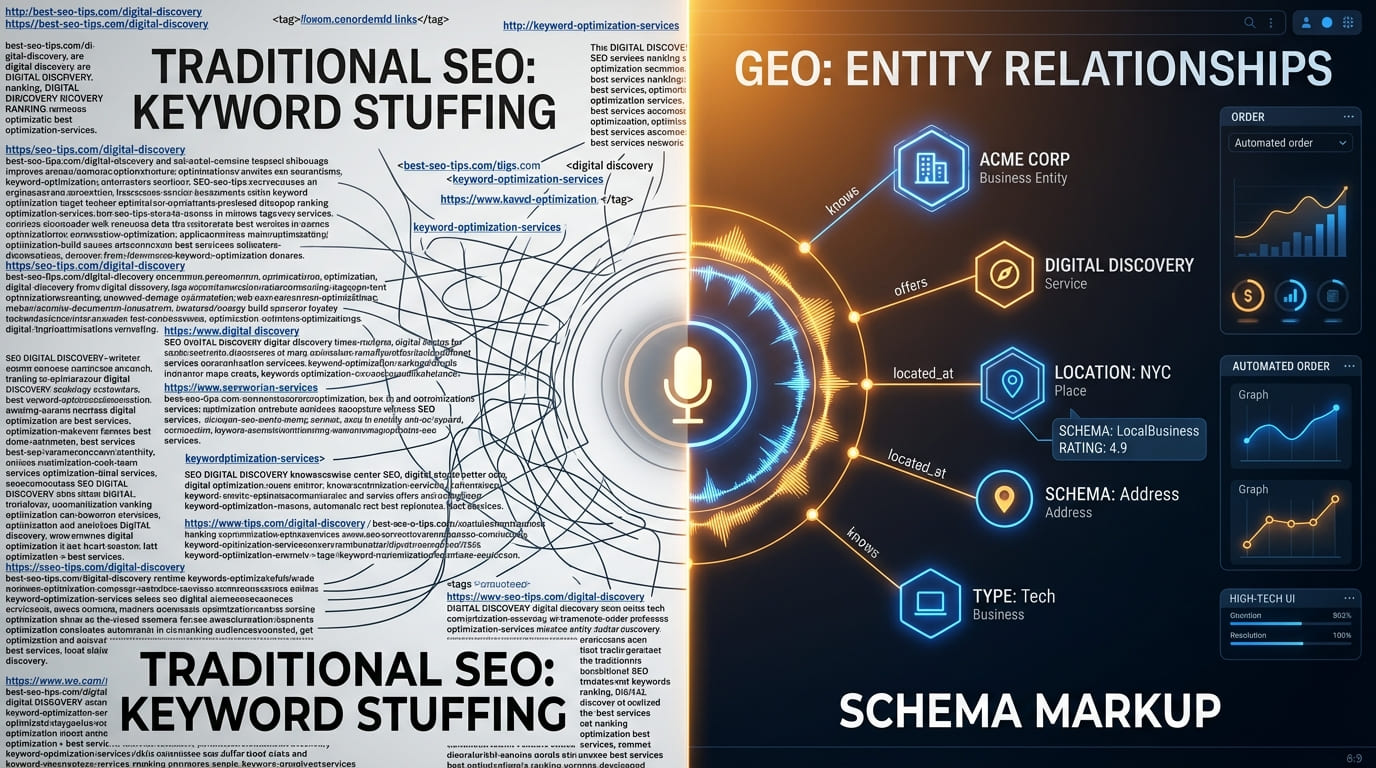
AI systems interpret the web by means of entities: people, organizations, products, places, and concepts.
Define key entities on your site, rather than leaving it vague.
For example:
Content with entities aids the AI in creating relationships and context more effectively.
Building trust in AI is an ongoing process. With time, out-of-date information can erode confidence.
Regularly update:
Fresh content means your brand is relevant and still in use.
AI models aren’t only dependent on your website. They also seek external confirmation in an independent manner.
These are a few invaluable trust signals:
To enhance their visibility in AI-driven search results, businesses need to prioritize the following:
The following actions enable your brand to be understood and trusted by AI systems.
Companies that prioritize data quality by creating structured, reliable, and trustworthy data sets will have a better chance of showing up in AI-powered recommendations and answers. The ones that ignore them are likely to be invisible in the next generation of search.
The LLM Trust Factor is all about ensuring that your brand is easily understood and trusted by both people and your website’s bot. Your brand will benefit from optimization today and will be more discoverable in an ever AI-focused world.
Imagine an AI pausing before speaking – does it know what you stand for? That moment depends on clear, consistent details floating through its learning. When facts about your company are easy to trace and confirm, guesses fade. Responses start naming names. Recognition grows without shouting. Visibility shifts when machines feel certain.
Every bit of public detail about your business lives inside a brand dataset. If those details are correct, match across platforms, and neatly arranged, machines that scan the web start seeing your company as reliable. How clearly they grasp what you do often depends on how clean that data stays.
Start by sharing knowledge that shows real experience. What matters? Accuracy, every single time. Trust builds when details stay correct across all pages. Think about how often news changes – your site should keep pace. Reputable sites linking to you help others notice. Structure guides visitors without shouting directions. Updates signal activity, like a shop window refreshed weekly. Clarity comes from order, not clutter. Each page works better when purpose leads design.
Hidden labels in web pages let AI spot things like stores, articles, people, or questions without confusion. Because of this setup, robots sort facts faster, almost like reading signs in a busy city. What stands out gets noticed first. Machines rely on these signals to understand what matters.
True enough. When business info clashes – like mismatched services or old phone numbers – artificial intelligence may question what to believe. One clear version everywhere makes it easier for systems to back you. Trust grows when facts stay steady.





 +91 9836 720 921
 +91 9836 720 921
 saha@zenithsolz.com
 soumya.seo@outlook.com


