NEW AEO Services - Get Found by AI Before Your Competitors Learn more →
NEW GEO Services Now Live — Dominate AI & Local Search Learn more →
A round of updates covering conversions, budgets, and product cards signals that ChatGPT Ads is no longer a side experiment. Here’s why it’s worth your attention now.
A lot of businesses still see ChatGPT Ads as a “someday” project. That’s a mistake, and the timing explains why. OpenAI has just rolled out a set of updates that reads like a platform preparing for serious advertiser budgets, not a beta feature list. It’s the same trajectory Google Ads and Meta Ads followed years ago — except this time the audience is already inside a chat interface, asking questions before they’d normally open a search engine.
None of these changes make headlines on their own. Looked at together, though, they tell a consistent story: ChatGPT Ads is being built for performance marketers, not just brand impressions. Getting in early, before the space fills up, is the advantage.
Here’s what OpenAI actually shipped, and what each one means in practice.
A new Conversions objective lets the system prioritize clicks that are more likely to become customers, even though billing still runs on valid clicks. You’re now paying for outcomes, not just clicks.
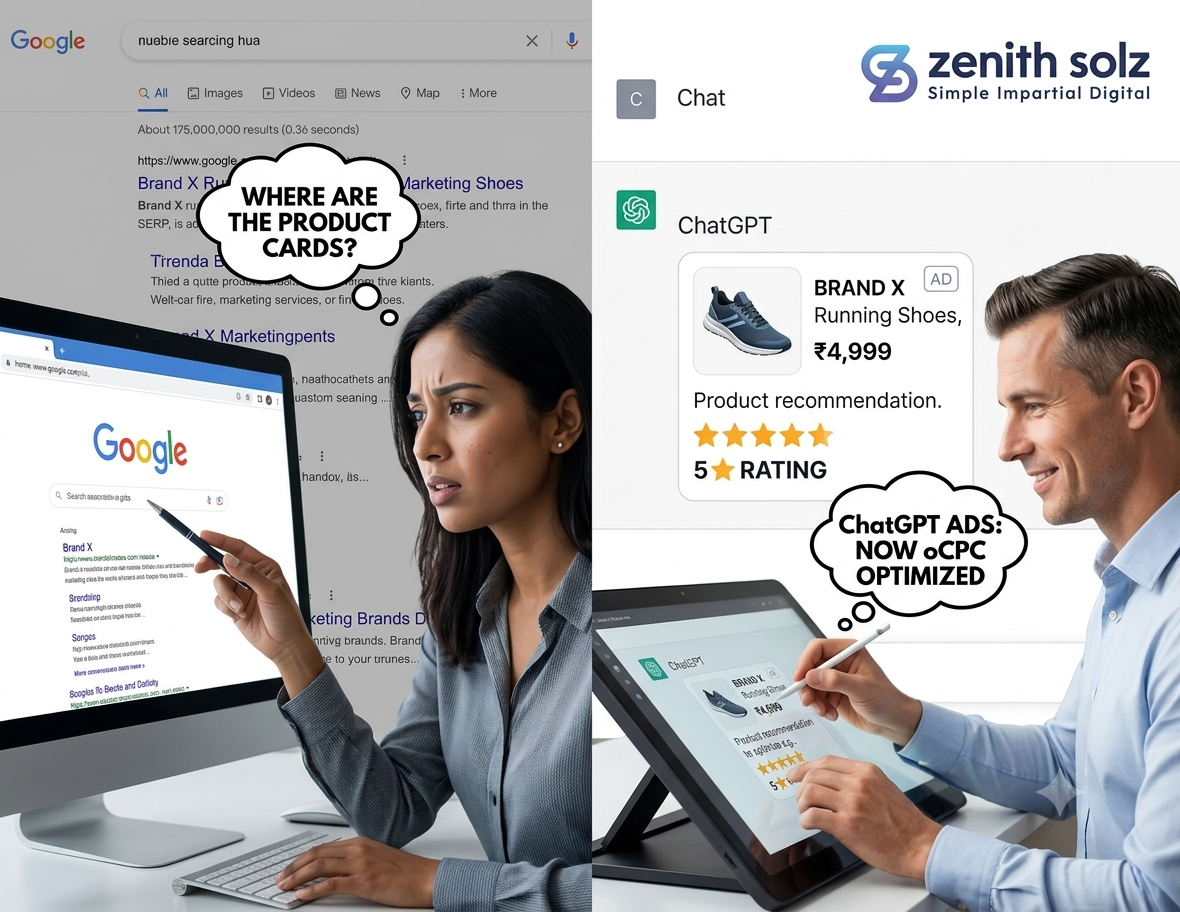
From next week, a “daily budget” is really a seven-day average rather than a fixed daily ceiling. Total spend is unchanged, but the platform has more room to shift budget toward the days performance is strongest.
Budgets now spread themselves across the day instead of front-loading spend in the first hour and going dark afterward — so your ads stay visible when customers are actually active.
You can now block specific regions from seeing your ads. Straightforward, but valuable for any business that only serves a defined area.
App businesses can attribute installs and in-app events back to ChatGPT Ads, already available in several markets — finally answering whether a click actually led to an install.
Turned on via Tools → Conversions → Data Source, this uses hashed customer data to catch conversions that would otherwise go untracked. Under-counting conversions has quietly hurt advertisers on every new platform, and this closes part of that gap.
Campaigns, ad groups, and ads can be created and edited in bulk, asynchronously. This is the update that lets agencies manage accounts at scale instead of building everything by hand.
Product cards now display price and star rating up front. Of all eight changes, this is the one product-based businesses should look at first.
Out of everything in this release, the product feed redesign is most likely to shift actual buying behavior. Someone asking “what’s a good pair of running shoes under ₹5,000” now sees price, rating, and options right there in the answer — no need to click out, open five tabs, and compare reviews separately.
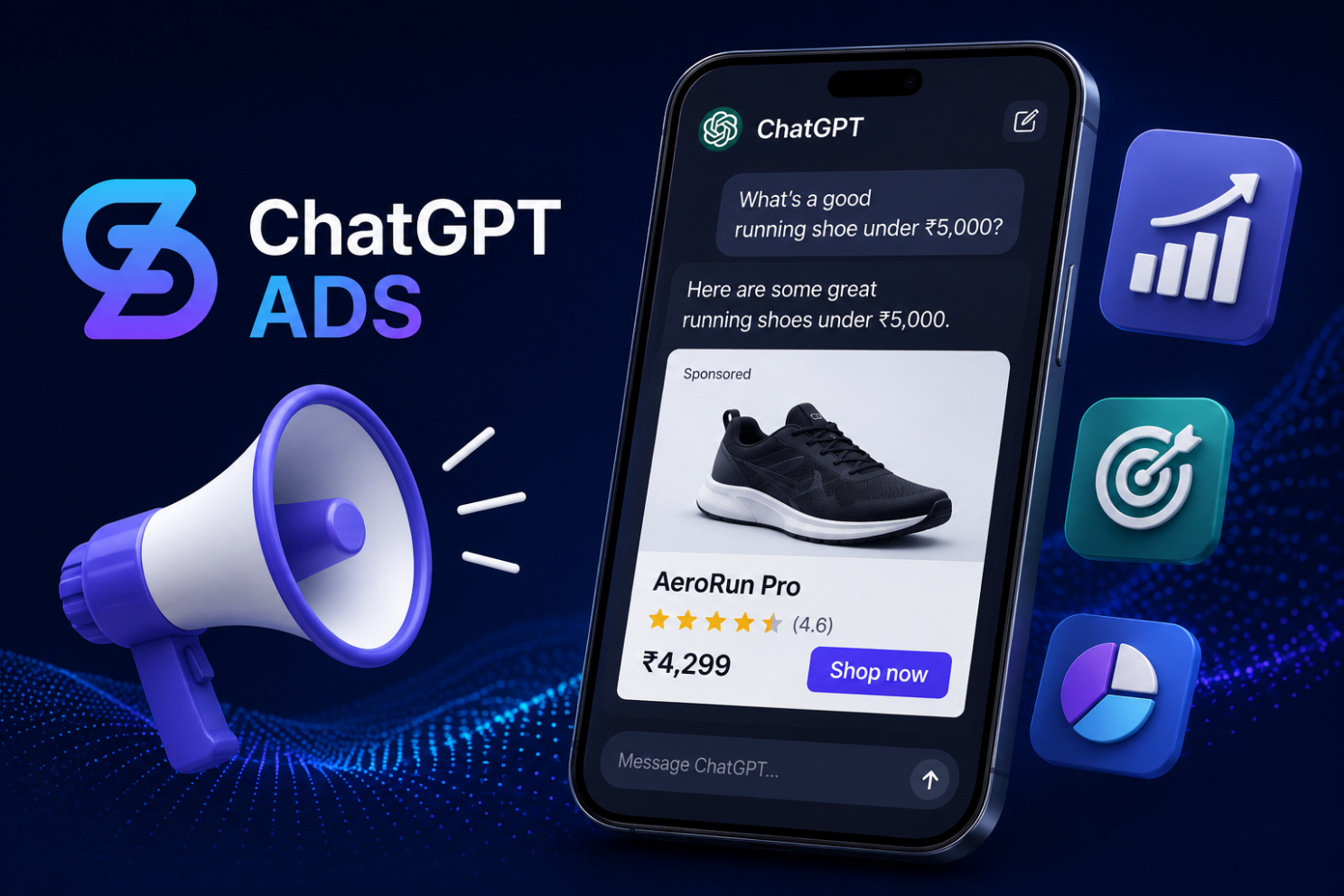
It’s a similar moment to what Google and Amazon went through with retail media, just happening inside a conversation instead of a search results page — a setting where trust and recommendation already carry more weight than a list of links. Businesses that get their product feeds clean and structured now are more likely to be the answer a customer sees first.
The AppsFlyer and Adjust integrations fix something that’s held back app marketers on every newer ad platform: without attribution, you’re spending on faith. A delivery app, a fintech product, or a SaaS app can now trace a ChatGPT ad through to an install and whatever happens after. That’s the difference between assuming a channel works and being able to show it does — and it’s usually the point where real budget starts to follow.
Platforms don’t build out conversion tracking, pacing, bulk management, and app attribution for a channel they treat as an afterthought. This is what it looks like just before a platform gets more expensive and more competitive.
That’s not a reason to rush out a campaign this week. It’s a reason to understand the update, and get your product feed, tracking, and targeting in order — the same way early advertisers approached Google and Meta in their first real growth phase: deliberately, not reactively.
If you sell products, your feed’s pricing, ratings, and descriptions now show up directly in the ad. A sloppy feed is a sloppy first impression.
Automatic advanced matching and oCPC only work as well as the data feeding them. Skip this step and you’ll optimize against incomplete numbers, quietly burning budget.
A small, quick setup task — and one of the easiest ways to stop paying for traffic you can never convert.
The Bulk API is built with multi-campaign advertisers in mind. Structure your account for that now, and you won’t have to rebuild it later.
People phrase questions inside ChatGPT differently than they type search queries. Reusing search-ad copy here rarely works — this channel needs its own approach.
No. Testing early is about learning how the platform behaves and getting your tracking and feed right, not about outspending anyone. A small, well-set-up test tells you more than a large, messy one.
No. Conversion tracking and optimization apply to service businesses, apps, and B2B companies just as much — anywhere you can define and measure a real outcome.
Likely the same pattern every ad platform follows: costs climb, competition grows, and the advertisers who set things up correctly early end up paying less to acquire customers than the ones who show up late.
As a full-stack digital marketing agency, we set up ChatGPT Ads properly from day one — clean product feeds, correctly configured conversion tracking, budgets structured for growth, and ad copy written the way people actually talk to an AI, not the way they type into a search bar.
We’re already doing this work for clients across several industries, and the pattern holds: businesses that figure out AI advertising now are the ones with an established presence by the time everyone else catches on.
Want to be one of the first businesses showing up inside ChatGPT conversations? Zenith Solz can help you set up, structure, and scale ChatGPT Ads properly — feed optimization, conversion tracking, and strategy included. Talk to our team.
Product update details referenced from OpenAI’s advertiser communication on ChatGPT Ads features (conversion-optimized campaigns, budget pacing, geo exclusion, mobile measurement partner integrations, automatic advanced matching, Bulk API, and refreshed product feed ad format), along with reporting on ChatGPT’s product feed ad rollout and app attribution integrations with AppsFlyer and Adjust across multiple markets.
As a full-stack digital marketing agency, we set up ChatGPT Ads properly from day one — clean product feeds, correctly configured conversion tracking, budgets structured for growth, and ad copy written the way people actually talk to an AI, not the way they type into a search bar.
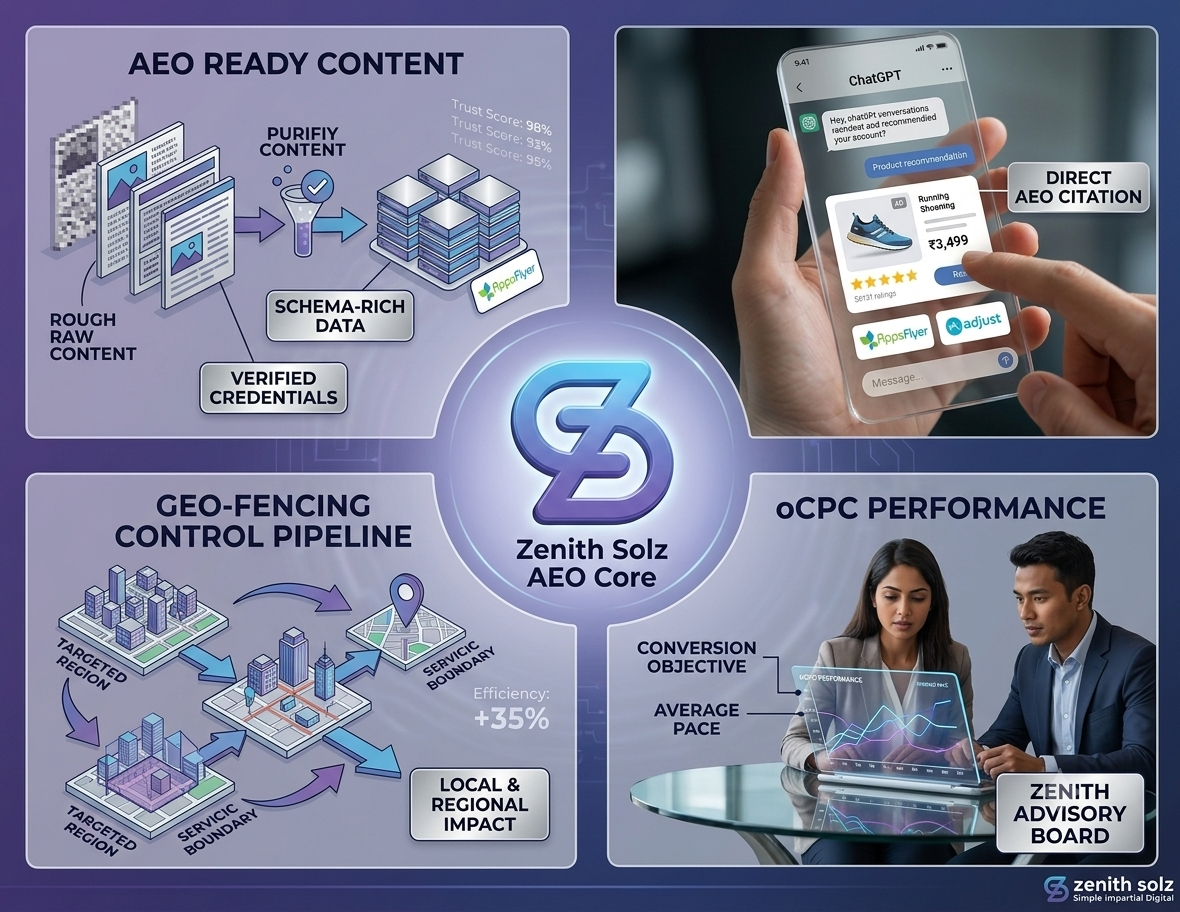
We’re already doing this work for clients across several industries, and the pattern holds: businesses that figure out AI advertising now are the ones with an established presence by the time everyone else catches on.
Want to be one of the first businesses showing up inside ChatGPT conversations? Zenith Solz can help you set up, structure, and scale ChatGPT Ads properly — feed optimization, conversion tracking, and strategy included. Talk to our team.







 +91 9836 720 921
 +91 9836 720 921
 saha@zenithsolz.com
 soumya.seo@outlook.com


